

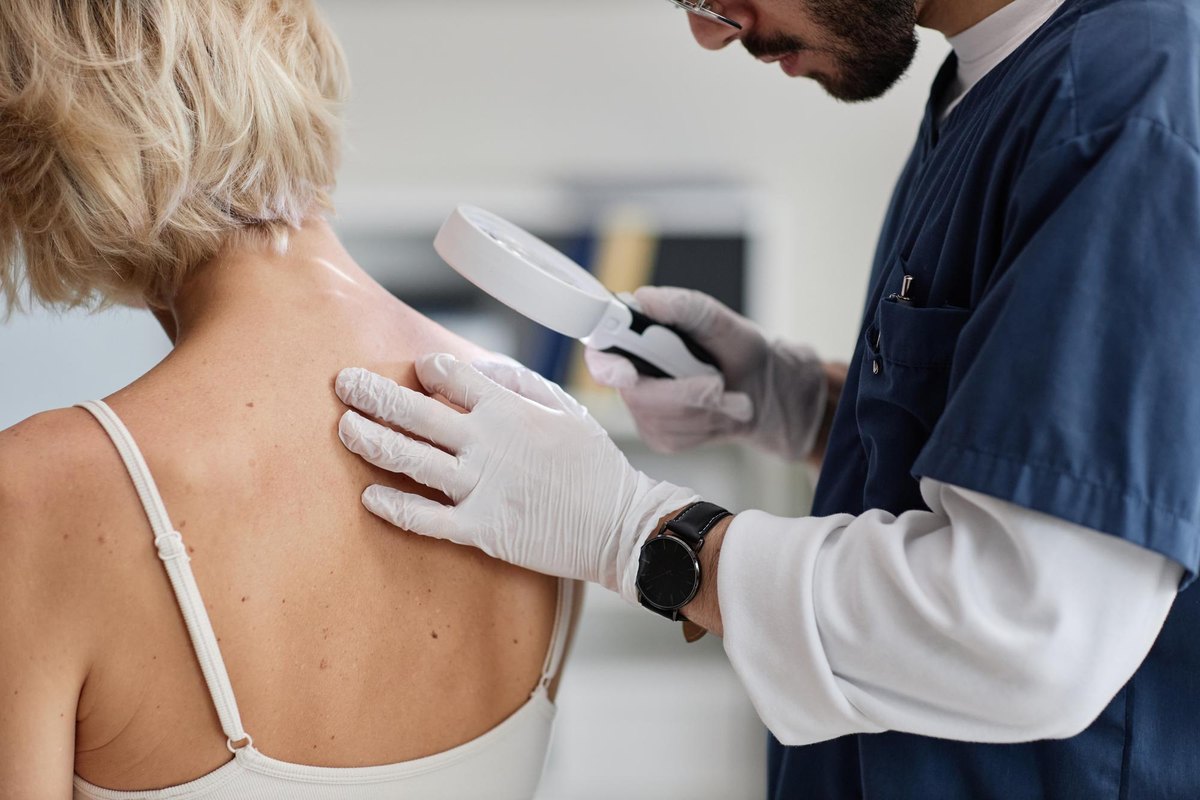
Those pale, patchy spots that show up on your chest, back, or shoulders after a Gulf Coast summer usually are not sun damage and they are not vitiligo. In most cases they are tinea versicolor, a harmless overgrowth of a yeast that already lives on everyone's skin. It thrives in heat, humidity, and sweat, which is exactly what Pensacola delivers from June through September. The condition is easy to treat with antifungal medication, but the discoloration fades slowly, and it comes back for many people every summer unless you plan for it.
What Is Tinea Versicolor, and Why Does It Show Up in Summer?
Tinea versicolor is a superficial fungal skin condition caused by Malassezia, a yeast that lives normally in the oil on human skin. When heat, humidity, and sweat give that yeast the conditions it likes, it multiplies faster than usual and disrupts normal pigment production in the top layer of skin. The result is patches that look lighter or darker than the skin around them.
Despite the name, it has nothing to do with hygiene, and it is not contagious. You did not catch it from a towel, a pool, or another person. The yeast was already there. Summer simply changed the environment.
That is why the practice sees a predictable seasonal wave. Along the Gulf Coast, high dew points keep skin damp for hours at a time, and sweat sits on the chest and back under shirts, rash guards, and athletic gear. Patients who spend their summers on the water, on the ball field, or working outdoors in Pensacola and Northwest Florida are the ones most likely to notice new spots in July and August.
Who Tends to Get It
Tinea versicolor is most common in teens and adults through their forties, when oil production is highest. Other factors that raise the odds include:
- Heavy sweating from work, sports, or heat exposure
- Naturally oily skin, or heavy oil-based lotions and sunscreens
- Hot, humid climates like the Florida Panhandle
- A weakened immune system or hormonal changes
- A family history of the same seasonal patches
What Does Tinea Versicolor Look Like?
The classic presentation is small, flat, oval patches that merge into larger areas on the chest, upper back, shoulders, neck, or upper arms. On lighter skin the patches often look pink, tan, or salmon-colored. On deeper skin tones they more often look lighter than the surrounding skin, which is why so many people first notice them after a summer of sun exposure. The patches themselves do not tan, so the contrast becomes obvious once the skin around them darkens.
Other common features:
- A fine, dry, slightly scaly surface that flakes when scratched
- Mild itching, or no symptoms at all
- Slow spread over weeks rather than days
- Fading in cooler, drier months and returning the next summer
What tinea versicolor does not do is blister, weep, form thick plaques, or spread to the palms and soles. Those signs point somewhere else, and they are worth having examined.
How Is Tinea Versicolor Different From Other Summer Rashes?
This is the question that brings most people in. Several warm-weather skin problems look alike from across the room, and the treatments are not interchangeable. Using an antifungal on eczema, or a steroid cream on a fungal overgrowth, usually makes things worse rather than better.
| Condition | What It Looks Like | Where It Shows Up | Typical Treatment Path |
|---|---|---|---|
| Tinea versicolor | Flat, finely scaly light or tan patches; little or no itch | Chest, upper back, shoulders, neck | Topical antifungal wash or cream; oral antifungal for widespread cases |
| Heat rash (miliaria) | Tiny raised bumps or clear blisters; prickly, stinging feel | Skin folds, waistband and bra lines, under gear | Cooling, breathable fabric; resolves on its own in days |
| Eczema (atopic dermatitis) | Dry, thickened, intensely itchy patches that can crack or weep | Elbow and knee creases, hands, neck, face | Prescription anti-inflammatory therapy plus a barrier-repair routine |
| Ringworm (tinea corporis) | Ring-shaped patch with a raised, scaly, advancing border | Trunk, arms, legs, groin, feet | Targeted antifungal therapy, often longer than expected |
| Vitiligo | Sharply bordered, completely white patches with no scale | Hands, face, around eyes and mouth, anywhere | Medical evaluation; a different category of treatment entirely |
A dermatologist can usually tell these apart in the exam room. When the picture is not obvious, a simple in-office skin scraping examined under the microscope confirms whether yeast is involved before anyone commits to a treatment plan. That step matters more than people expect, because the patches that linger the longest are often the ones that were treated for the wrong condition first.
How Do Dermatologists Treat Tinea Versicolor?
Treatment has two separate goals, and it helps to keep them apart in your mind: clear the yeast overgrowth, then wait for pigment to even back out. The first goal is fast. The second is not.
Topical Antifungals
Most cases respond to antifungal products applied to the skin: medicated washes, shampoos, creams, or lotions containing ingredients such as selenium sulfide, ketoconazole, or zinc pyrithione. For chest and back involvement, a wash used in the shower is often easier to apply consistently than a cream, and consistency is what actually clears it. Mild cases sometimes respond to over-the-counter versions, but prescription strength is more reliable when large areas are involved.
Oral Antifungals
When the patches are widespread, keep recurring, or have not responded to topical therapy, a dermatologist may prescribe a short course of an oral antifungal. This is a decision that belongs in a clinical exam, not a guess, because oral antifungals interact with other medications and are not appropriate for everyone.
Maintenance for Recurring Cases
Because the yeast is a normal skin resident, treatment does not remove it permanently. For patients who get tinea versicolor every summer, the practical approach is periodic maintenance: using a medicated wash once or twice a month through the humid stretch of the year, before the patches appear rather than after. In our climate, that usually means starting in late spring rather than mid-August.
Why the Spots Are Still There After Treatment
This is the most common source of frustration. The scale and the itch clear quickly, but the color difference can take weeks to a few months to blend, because pigment-producing cells need time to normalize and the surrounding skin needs to lose its tan. Persistent light patches after treatment usually mean the infection is gone and the pigment has not caught up yet. Daily broad-spectrum sunscreen speeds up the process by keeping the untouched skin around the patches from darkening further.
When Should You See a Dermatologist?
Plenty of mild cases clear with a drugstore antifungal wash. It is worth having the patches looked at when:
- Over-the-counter treatment has not helped after two to four weeks
- The patches keep coming back every summer
- Large areas of the chest, back, or arms are involved
- The spots itch significantly, blister, or look inflamed
- You are not certain the diagnosis is right
That last point is the important one. Discoloration and rash are exactly where self-diagnosis goes sideways, and a lingering patch is worth a professional look. Our team also evaluates the broader category of rashes, itching, and inflammatory skin conditions through medical dermatology care, so if the patches turn out to be something other than tinea versicolor, the visit still gets you an answer. If chronic itching and dryness are the bigger problem, our eczema treatment options are a better starting point, and our guide to managing eczema flare-ups in humid climates covers the seasonal side of that condition.
Frequently Asked Questions About Tinea Versicolor
Is tinea versicolor contagious?
No. The yeast that causes it already lives on nearly everyone's skin, so it is not passed between people through skin contact, towels, or shared pools. Family members who get it in the same summer are usually reacting to the same heat and humidity, not passing it around.
How long does it take for the spots to fade?
The infection typically clears in two to four weeks of consistent treatment, but the color difference can linger for several weeks to a few months afterward. Sun protection helps the tone even out faster.
Will it come back next summer?
For many people, yes. Recurrence is common because the underlying yeast is normal skin flora and Gulf Coast summers keep giving it ideal conditions. A maintenance schedule with a medicated wash during humid months is the usual way to stay ahead of it.
Can I still be in the sun and the water?
Yes. Tanning does not treat it, and it makes the contrast more noticeable, so daily broad-spectrum SPF 30 or higher matters. Rinsing off and changing out of damp clothing promptly after swimming, workouts, or yard work reduces the sweat-and-humidity conditions the yeast prefers.
Can I just use a steroid cream from the medicine cabinet?
That is a common mistake worth avoiding. Topical steroids reduce inflammation but do nothing about yeast, and they can allow the overgrowth to spread while masking the appearance. If a rash is not clearly improving, have it identified before treating it.
Summer patches on the chest and back are one of the most common things we see this time of year in Northwest Florida, and they are also one of the most treatable. The tricky part is telling them apart from the other rashes that thrive in heat and humidity.
If those spots are not fading, keep coming back, or you simply want to know what you are looking at, the board-certified dermatologists at Pensacola Dermatology can examine your skin, confirm the diagnosis, and put together a treatment and prevention plan built for our climate. Contact our Pensacola office to request an appointment.