

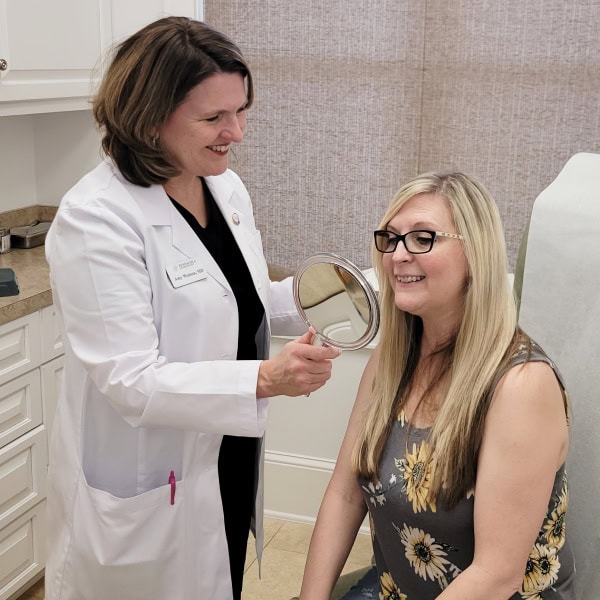
A full-body skin exam is a thorough, head-to-toe visual inspection performed by a board-certified dermatologist to detect suspicious moles, unusual lesions, and early signs of skin cancer. You might also hear it called a skin cancer screening or total body skin examination. If you've been wondering what happens during a full-body skin exam, this guide walks you through the entire process so you know exactly what to expect.
The exam itself is noninvasive and typically takes between 10 and 20 minutes. Your dermatologist carefully evaluates every area of your skin using the ABCDE criteria (Asymmetry, Border irregularity, Color variation, Diameter, and Evolving characteristics) to identify spots that warrant closer attention. Many dermatologists also use a dermatoscope, a specialized magnifying instrument that reveals details beneath the skin's surface not visible to the naked eye.
Many dermatologists recommend annual skin exams, though patients with higher risk factors may need more frequent screenings. Your skin is your body's largest organ and serves as your primary defense system against environmental factors.
It takes a beating every day from UV rays, pollution, and general wear. Regular professional examinations at a practice like Pensacola Dermatology help catch problems early, when they're easiest to treat.
What Happens During a Full-Body Skin Exam: Step by Step
Here's what to expect at each stage of your screening, from check-in to any follow-up steps. The entire process takes 10 to 20 minutes.
How Should You Prepare for the Exam?
When you arrive, you'll check in and be taken to a private exam room. You'll change into a gown, removing clothing so the dermatologist can examine your skin thoroughly. Before your visit, remove any nail polish from your fingers and toes, and take off jewelry so these areas can be properly evaluated.
What Will the Dermatologist Ask About Your History?
Expect a conversation about your medical history, including any family history of skin cancer. This is also the time to mention specific spots that concern you. Have you noticed a mole that's changed? A new spot that appeared recently? Bring these up now.
How Does the Dermatologist Examine Your Skin?
The examination moves methodically through each body region:
- Scalp and hairline
- Your face, ears, and neck
- Chest, abdomen, back
- Arms and hands, including fingernails
- Legs, feet, and toenails
- Skin between fingers and toes
What Happens If a Spot Looks Suspicious?
Sometimes a spot needs a closer look. A dermatoscope (a handheld device that illuminates and magnifies the skin) reveals patterns and structures that help distinguish harmless spots from potentially concerning ones. You won't feel anything during this part of the exam.
Will You Need a Biopsy?
When a spot looks abnormal, a biopsy may be recommended during the same visit. The area is numbed, and a small tissue sample is removed for laboratory analysis. Results typically come back within one to two weeks.
Why Full-Body Skin Exams Are Worth Your Time
Full-body skin exams save lives by catching skin cancer at its earliest, most treatable stages. With the 5-year survival rate for localized melanoma at roughly 99% (Source: American Cancer Society, Cancer Facts & Figures 2024), early detection through regular screenings is one of the most reliable tools available to patients and providers alike.
How Does Early Detection Improve Survival Rates?
That survival rate drops significantly once melanoma spreads to lymph nodes or distant organs. Beyond melanoma, full-body skin exams identify precancerous lesions like actinic keratoses before they progress. Basal cell carcinoma and squamous cell carcinoma are also far simpler to treat at earlier stages.
Why Is a Baseline Mole Map Important?
A baseline mole map is something many patients overlook. When your dermatologist knows what your skin looks like normally, they can spot subtle changes at future visits that might otherwise go unnoticed. That first exam creates a reference point for every screening that follows.
Most people miss areas like the back, scalp, and soles of the feet during self-exams. Your dermatologist covers all of it.
Full-Body Skin Exam vs. Self-Exam at Home
Monthly self-exams are a valuable habit, but they can't replace professional screening. Here's how the two approaches compare:
| Factor | Self-Exam at Home | Professional Skin Exam |
|---|---|---|
| Frequency | Monthly | Annually (or more often for high-risk patients) |
| Areas covered | Limited by what you can see | Full coverage, including scalp and back |
| Tools used | Mirror, good lighting | Dermatoscope with magnification |
| Detection ability | Surface-level changes only | Subsurface patterns and structures |
| Expertise | Your own observation | Years of specialized training |
Self-exams are your early warning system, and your dermatologist is the expert backup. Use both together for the best chance of catching changes early. Examine your own skin monthly with a full-length mirror and a hand mirror for hard-to-see spots, then see your provider annually for a thorough professional evaluation.
How Much Does a Full-Body Skin Exam Cost?
A full-body skin exam without insurance coverage generally costs between $100 and $250, depending on the practice and your geographic area. Many insurance plans cover annual skin cancer screenings as preventive care, meaning you may pay little or nothing out of pocket. Medicare and most private insurers recognize the value of early detection.
If a biopsy is performed, additional laboratory and pathology fees may apply. At Pensacola Dermatology in Pensacola, FL, our team can help verify your insurance coverage and explain any out-of-pocket costs before your appointment.
Catching something early almost always means simpler treatment and lower costs down the road. A 15-minute screening is a small investment compared to the expense of treating advanced skin cancer.
Who Should Get a Full-Body Skin Exam?
Every adult benefits from skin cancer screening. Many dermatologists recommend that all adults have at least one baseline skin exam, followed by annual screenings moving forward. Patients with elevated risk factors, including a personal or family history of skin cancer, may need screenings every three to six months.
What Risk Factors Require More Frequent Screening?
Certain factors put you at higher risk:
- Fair skin that burns easily
- Severe or blistering sunburns, especially in childhood
- Family history of melanoma or other skin cancers
- Personal history of skin cancer, even if successfully treated
- 50 or more moles on the body
- Outdoor occupation or frequent UV exposure
- Immunosuppression from medication or medical conditions
Living in Pensacola and northwest Florida means year-round sun exposure, which makes routine screenings especially relevant for residents in our area.
When Should You See a Dermatologist Between Screenings?
Don't wait for your scheduled annual exam if you notice something concerning. If a new spot appears suddenly, a mole changes in size or color, or a lesion bleeds, itches, or won't heal, schedule an appointment right away. You know your own skin. When something looks or feels different, that instinct is worth acting on.
Frequently Asked Questions About Full-Body Skin Exams
Do I need to undress completely?
You undress to your comfort level. A gown is provided, and the dermatologist examines one area at a time, keeping other areas covered for privacy. If you prefer to keep certain areas covered, let your provider know.
How often should I get a skin exam?
Most adults should get a full-body skin exam once a year. High-risk patients may need screenings every three to six months. Your provider will suggest a schedule based on your individual risk factors.
What happens if they find something suspicious?
If a concerning spot is identified, a biopsy is the likely next step. This involves numbing the area with a local anesthetic and removing a small tissue sample. The sample goes to a pathology lab, and you'll typically receive results within one to two weeks. Your care team will contact you with results and discuss next steps.
How do I prepare for a full-body skin exam?
Remove nail polish from fingers and toes so the dermatologist can examine the nail beds. Arrive with clean skin and no makeup if possible. Make a mental note of any spots that concern you so you can point them out during the exam.
Does a skin exam hurt?
The visual examination is completely painless, just a careful look at your skin. If a biopsy is needed, the area is numbed first, so you'll feel only slight pressure. Most patients describe the process as quick and tolerable.
Regular full-body skin exams are one of the most effective ways to protect your skin and catch problems before they become serious. Whether you're due for your annual screening or you've spotted something that doesn't look right, the team at Pensacola Dermatology is here to give you answers. Pensacola dermatology has been providing exceptional medical, surgical, and aesthetic dermatological care in northwest florida since 2004. If you're overdue for a screening or have a spot that concerns you, request an appointment at our Pensacola, FL practice today.