

A rash may be serious if it spreads rapidly, blisters, is accompanied by fever or difficulty breathing, or doesn't improve within one to two weeks of home care. Minor irritation typically stays localized, causes only mild itching or redness, and resolves on its own within a few days.
A rash is any visible change in your skin's color, texture, or appearance that signals something is happening beneath the surface. Most rashes stem from minor irritation and clear up on their own, but some point to conditions that require prompt medical attention. Knowing the difference saves you unnecessary worry when a rash is harmless. It also helps you recognize when it's time to see a dermatologist. At Pensacola Dermatology, our board-certified dermatologists help patients across northwest Florida distinguish between harmless irritation and rashes that need treatment.
What Causes Rashes and Why Some Are More Serious Than Others
Rashes are caused by irritants, allergens, infections, autoimmune conditions, and systemic reactions. Minor rashes from irritants tend to resolve in days, while serious rashes from infections or autoimmune disease typically require treatment.
Dozens of triggers can set off a skin reaction on any given day. Harsh soaps, heat exposure, dry winter air, and mild allergic responses to new products can all produce temporary redness, bumps, or itching. Most of the time, these reactions are short-lived. Once you remove the irritant, they usually clear up within a few days. According to the American Academy of Dermatology, the majority of rashes resolve without medical treatment, which means most skin reactions you experience are manageable at home with basic care.
Serious rashes tell a different story. Bacterial, viral, or fungal infections can spread and worsen without treatment. Autoimmune conditions like lupus or dermatomyositis may first show up as unexplained skin changes that don't respond to typical remedies. Widespread hives from a systemic allergic reaction can signal real distress in the body, and these require fast evaluation. Certain medication reactions can also produce rashes that escalate quickly, making it important to note any new prescriptions when symptoms appear.
Here's what makes evaluation tricky: appearance alone can be misleading. A harmless rash might look alarming, while a dangerous one could seem mild at first glance. Conditions like eczema, psoriasis, and skin allergies are common culprits behind persistent rashes, but each requires a different treatment approach.
Too many patients spend weeks applying the wrong over-the-counter creams because they misidentified their rash. A professional evaluation eliminates that guesswork and gets you on the right treatment faster.
How Dermatologists Evaluate Whether a Rash Is Serious
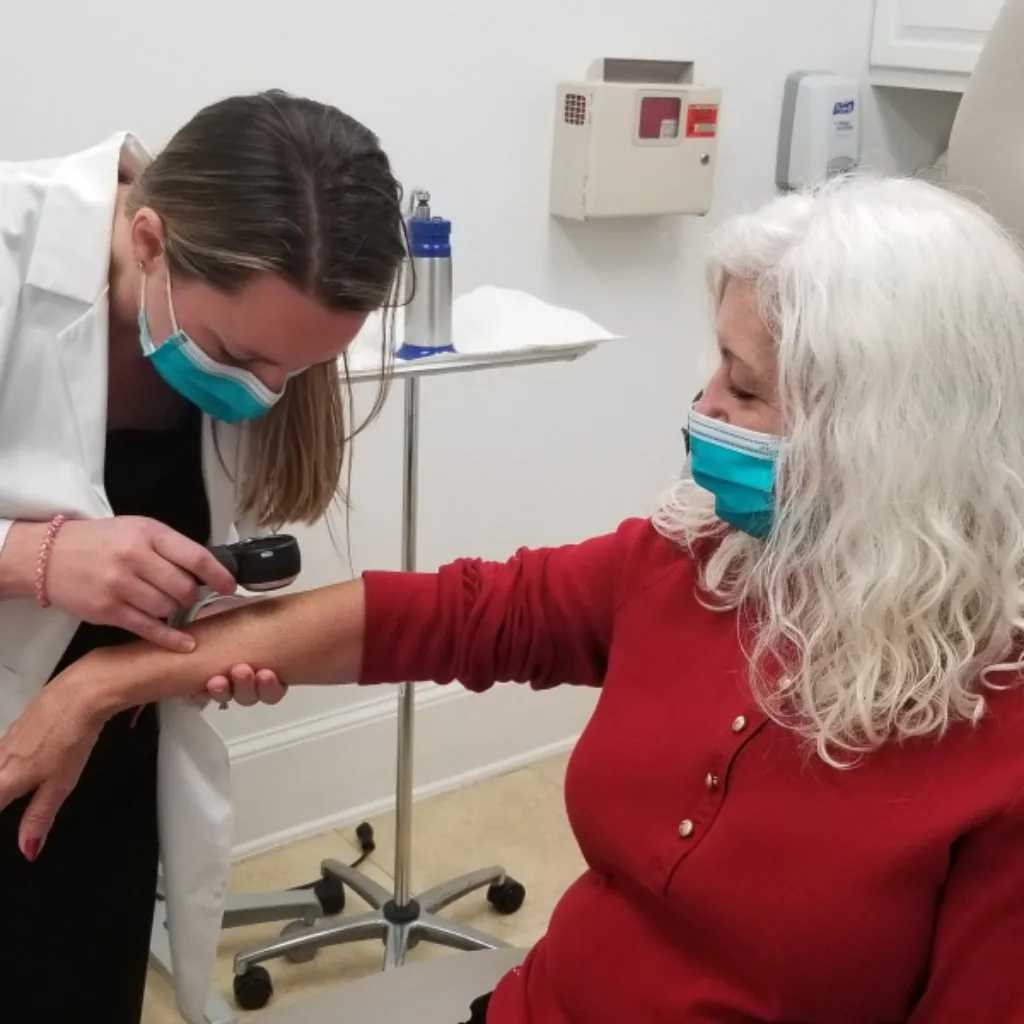
A board-certified dermatologist evaluates rashes through a detailed physical exam, reviewing the rash's pattern, distribution, and texture alongside your medical history and, when needed, ordering diagnostic testing like biopsies or patch testing.
When you visit a dermatologist for a rash in Pensacola, the evaluation involves a thorough physical exam combined with a careful review of your history. The provider examines the rash's pattern, color, texture, and distribution across your body. They look at whether it's symmetrical, whether it follows a specific nerve pathway, and whether the borders are well-defined or irregular. These details provide important diagnostic clues that guide the next steps.
Medical history matters just as much as what's visible. Expect questions about:
- When the rash first appeared
- Whether anything triggered it (new detergent, food, medication, outdoor exposure)
- If you've started any new medications recently
- History with allergies or skin conditions
- Whether family members have similar symptoms
Sometimes a visual exam and thorough history are enough for diagnosis. Other times, additional testing is necessary.
Skin biopsies can identify cellular changes invisible to the naked eye. Patch testing helps uncover hidden allergies contributing to chronic skin reactions. Blood work may be ordered when systemic causes are suspected. At Pensacola Dermatology, our team also assesses whether you're experiencing symptoms beyond the skin itself. Fever, joint pain, fatigue, or swollen lymph nodes alongside a rash can indicate something more significant than local irritation, and those systemic clues often change the diagnostic direction entirely.
Why Does Getting a Professional Rash Evaluation Matter?
Getting a professional rash evaluation matters because early, accurate diagnosis prevents complications, rules out serious underlying conditions, and connects you with targeted treatment faster than trial-and-error self-care. A board-certified dermatologist can identify causes that are invisible to the untrained eye and create a personalized treatment plan based on your specific condition.
Why Does Early Detection Matter?
Waiting too long or treating a rash incorrectly can lead to complications that are harder to reverse. Early detection of serious conditions, including certain skin cancers and autoimmune diseases, leads to more treatment options and better long-term results. What looks like a stubborn rash could be an early warning sign, and catching it early makes a real difference.
What Are the Risks of Self-Treatment?
Self-treatment carries real risks. Applying steroid creams to a fungal infection, for example, can actually make it spread. That's a mistake dermatologists see often. Using harsh products on eczema can damage your skin barrier further, and without knowing what you're treating, you might be prolonging your discomfort or making the underlying problem worse. Accurate diagnosis leads to targeted treatment and faster relief. When your provider identifies the exact cause, they prescribe the right medication at the right strength, so you stop wasting money on products that don't work.
There's also the reassurance that comes with answers. Many patients feel immediate relief simply learning their rash is benign irritation rather than something serious.
Serious Rash vs. Minor Irritation: Key Differences
The key differences between minor irritation and a serious rash involve location, duration, systemic symptoms, and response to home care.
| Characteristic | Minor Irritation | Serious Rash |
|---|---|---|
| Location | Stays in one area | Spreads to multiple body regions |
| Duration | Resolves within days | Persists or worsens over time |
| Symptoms | Mild itch, slight redness | Severe pain, burning, or intense itch |
| Systemic signs | None | Fever, fatigue, joint pain |
| Appearance | Flat, dry, or mildly bumpy | Blistering, oozing, or crusting |
| Response to care | Improves with basic moisturizer | Doesn't respond to home treatment |
Warning signs that require prompt evaluation:
- Blistering or peeling skin, especially if painful
- A bull's-eye or target-shaped pattern (possible indicator of Lyme disease)
- Rash that's warm to the touch with red streaking
- Signs of infection: pus, increasing swelling, or spreading redness
Seek emergency care immediately if your rash is accompanied by:
- Difficulty breathing or swallowing
- Swelling of the face, lips, or throat
- High fever with a purple or bruise-like rash
How Much Does a Dermatology Rash Evaluation Cost?
A dermatology rash evaluation is typically covered by health insurance as a medical visit, not a cosmetic procedure. Out-of-pocket costs depend on your specific plan, deductible status, and whether additional testing is needed, but most patients pay a standard specialist copay.
An initial dermatology visit cost is typically comparable to any specialist visit. If your dermatologist recommends a biopsy or laboratory testing to confirm a diagnosis, those carry separate costs that insurance often covers when medically necessary. Many patients are surprised to learn that insurance coverage for a dermatologist visit related to rashes is quite broad, since these are clearly medical concerns.
For Pensacola patients with questions about coverage or payment options, most dermatology practices, including Pensacola Dermatology, can discuss specifics before your appointment so there are no surprises.
When Should You See a Dermatologist for Your Rash?
Schedule an appointment with a dermatologist if:
- Your rash persists longer than one to two weeks despite consistent home treatment with gentle cleansers and moisturizers
- You develop systemic symptoms like fever, joint pain, unexplained fatigue, or swollen lymph nodes alongside your rash
- You notice signs of infection including warmth, pus, swelling, or red streaking extending from the rash
- The rash appeared suddenly after starting a new medication, which could indicate a drug reaction requiring immediate attention
- You see a circular or bull's-eye shaped rash after spending time outdoors, which may indicate a tick-borne illness
A painless rash isn't always harmless. Some serious conditions present with minimal discomfort initially. On the flip side, intense itching doesn't automatically mean something is wrong, but it does mean you deserve relief and shouldn't have to tough it out.
When in doubt, a quick evaluation provides answers. A board-certified dermatologist at Pensacola Dermatology can often diagnose common rashes in a single visit and start you on a personalized treatment plan the same day at our Pensacola practice. The sooner you get a clear diagnosis, the sooner you can stop guessing and start feeling better. Patients across northwest Florida trust our team to provide the kind of thorough, individualized care that gets results.
Frequently Asked Questions About Rashes
Can a rash be a sign of something serious internally?
Yes. Autoimmune diseases, liver dysfunction, certain cancers, and systemic infections can all show up as skin changes. A rash accompanied by fatigue, unexplained weight loss, or joint pain warrants a thorough evaluation, and your dermatologist may coordinate with other specialists if internal causes are suspected.
Should I go to the ER or a dermatologist for a rash?
Visit the emergency room if your rash comes with difficulty breathing, facial swelling, high fever, or rapidly spreading purple discoloration. These symptoms suggest life-threatening conditions that need immediate care. For rashes without emergency symptoms, a dermatologist provides more specialized evaluation and can often see you sooner than you'd expect.
How long should I wait before seeing a doctor about a rash?
If home treatment with gentle skincare doesn't improve your rash within one to two weeks, schedule an appointment. Don't wait if you notice spreading, blistering, fever, or signs of infection. Trust your instincts: if something feels wrong, it's worth getting checked.
Can stress cause a rash?
Stress doesn't directly cause rashes, but it can trigger or worsen existing skin conditions like eczema, psoriasis, and hives. Stress hormones affect your immune system and can disrupt your skin barrier, which is why flare-ups often coincide with stressful periods. If you notice that pattern, mention it to your board-certified dermatologist so they can factor it into your personalized treatment plan.
What does an infected rash look like?
An infected rash typically shows increasing redness that spreads beyond the original area, warmth when touched, swelling, and possibly pus or yellow crusting. Red streaks extending outward indicate the infection is moving through your lymphatic system. Fever alongside these signs confirms you need medical attention promptly.
If you're dealing with a rash that won't resolve, looks concerning, or is affecting your quality of life, the board-certified dermatologists at Pensacola Dermatology are here to help. Schedule a rash evaluation at our Pensacola, Florida practice so you know exactly what's going on and what to do about it.